The SEO industry generates a lot of new terminology, and not all of it earns its place. When “generative engine optimization” or GEO started circulating more widely about eighteen months ago, the initial reaction from many practitioners was skepticism. Another acronym, another agency rebrand, another excuse to charge more for the same services.
That skepticism is understandable. But GEO, when the term is used accurately, describes something that is genuinely meaningfully different from traditional search optimization, and dismissing it as hype is a mistake.
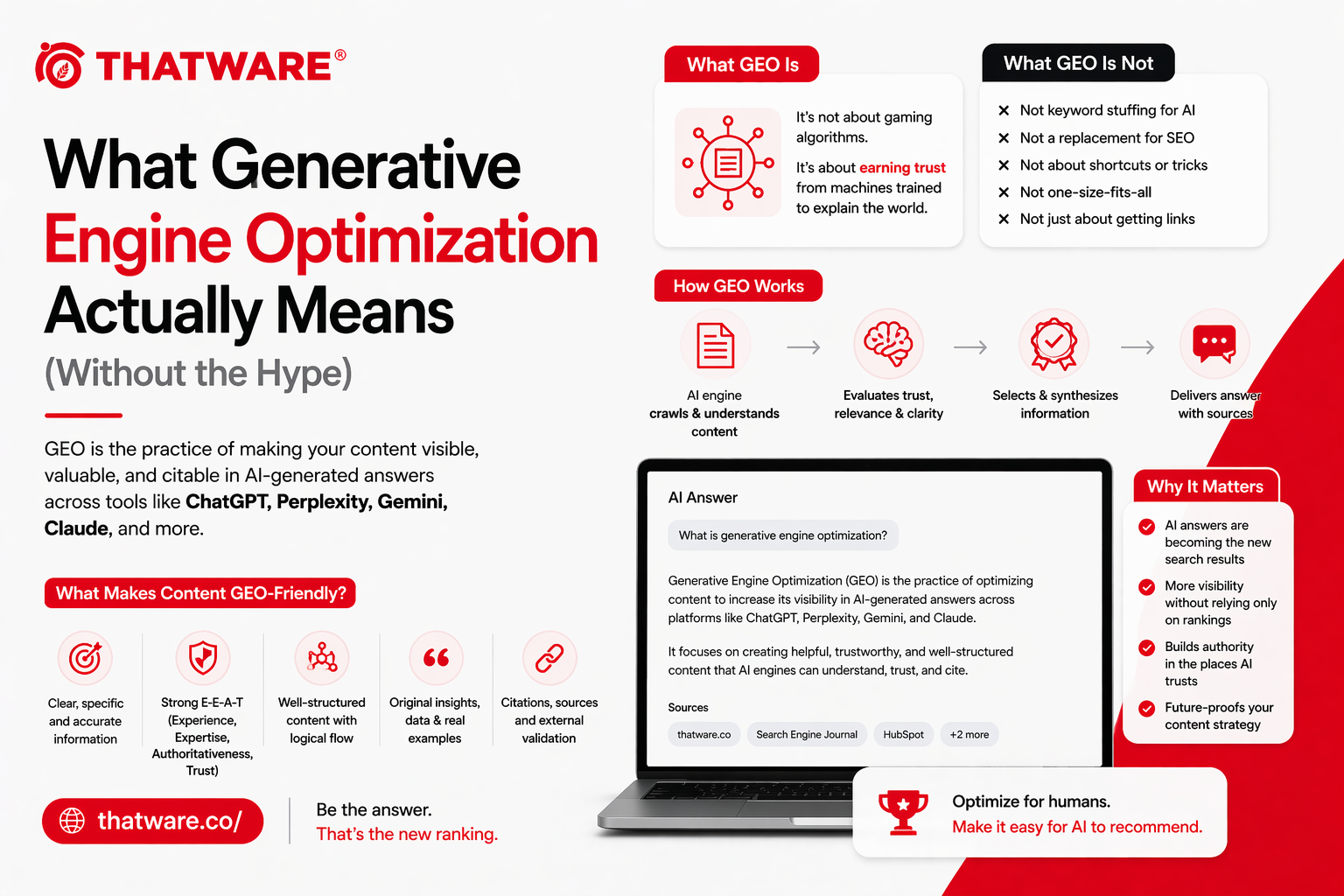
Here’s what it actually describes. Generative engines are AI systems that generate answers rather than returning lists of pages. When someone asks ChatGPT, Perplexity, Google’s AI Overviews, or Microsoft Copilot a question and gets back a written response rather than a list of links, they’ve used a generative engine. Generative engine optimization is the practice of making your content, brand, and information assets perform well within these systems specifically.
The distinction from traditional SEO is real and specific. Traditional search engines rank pages. Generative engines synthesize information from sources to produce new text. The relationship between your content and the end user is fundamentally different. Instead of driving a click to your page, you might be having your information incorporated into an AI-written response that the user reads without clicking anywhere.
Whether that’s good or bad for your business depends on your goals. For brand awareness and topical authority, being cited in AI-generated responses is genuinely valuable. For driving clicks to content that monetizes through advertising or that converts through its own content experience, the calculus is more complicated.
What does optimizing for generative engines actually involve? Several things that overlap with good SEO practice but with specific emphases.
Structured, extractable content. Generative AI systems do better work with content that’s clearly organized, uses explicit topic sentences, and presents information in a format that’s easy to parse and accurately summarize. Dense, ambiguous prose is harder for these systems to represent accurately. Clear structure is not just a reader experience improvement, it’s a generative AI experience improvement.
Factual accuracy and consistency. AI systems are trained to associate sources with accuracy. Content that’s demonstrably accurate, internally consistent, and aligned with how other authoritative sources represent the same facts builds the kind of source credibility that leads to citation in generated responses.
Authoritative presence across multiple sources. Generative AI systems don’t just draw from your website. They draw from a broad web of sources. Being mentioned, discussed, and referenced in credible third-party sources is part of what builds the kind of authority that AI systems recognize and draw from.
generative engine optimization services that are well-implemented bring all of these components together in a coordinated strategy. They audit existing content for AI extractability, identify gaps in factual coverage and entity clarity, build authority-building programs specifically aimed at increasing brand and content presence in the sources AI systems draw from, and monitor how the brand appears in AI-generated responses over time.
geo optimization agency work is at its best when it’s integrated with traditional SEO rather than positioned as a replacement for it. The technical foundations of good SEO and the content quality standards that drive good generative engine performance are aligned. What GEO adds is the specific analytical layer of asking “how does an AI system experience this content” in addition to “how does a search crawler index this content” and “how does a human reader engage with this content.”
The honest state of the field in 2026 is that best practices are still developing. The measurement infrastructure for generative engine performance is less mature than for traditional SEO. But the direction of travel is clear, and the businesses investing in understanding and optimizing for how AI systems interact with their content are building advantages that will matter more, not less, as generative search becomes more prevalent.